CJP warns of fresh protests over Centre’s ‘promise breach’
The latest movement in the protest turn into the final step of the demand.
Published on: 28-Jul-2026
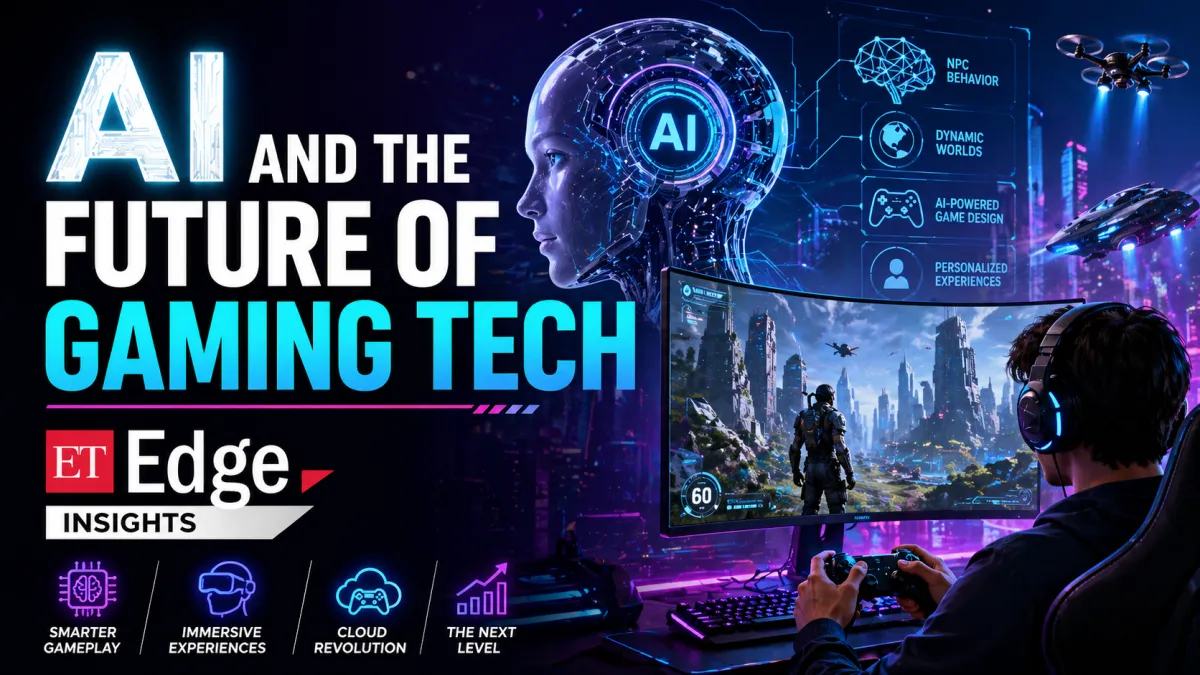
Artificial Intelligence (AI) is changing the way we use technology. The conventional boundaries of innovation are being redefined across many areas, including gaming.
Even before the emergence of AI, high-end gaming offered rich graphics, intense multiplayer options, and storylines that could branch off in different directions, depending on the in-game decisions of a player. For instance, the same game would pose different challenges if played from the perspective of a different class of hero figure, especially in the role-playing genre, where dice rolls could sometimes change battle outcomes.
Gameplay has come a long way in offering unique and new experience, and now AI is adding to that. With AI, games can now adapt, learn, and create meaningful new content based on the choices of a specific player, in a manner which goes beyond what was possible in the past. Gameplay now becomes quite dynamic, with the same game delivering entirely different experiences to different players at a much deeper level.
AI has driven the need to speedily process data and generate content, which has made a huge impact on game development as well. The Boston Consulting Group’s Video Gaming Report 2026 estimates that almost 50 percent of gaming studios are now using AI for reasons such as efficiency and quality control. The report also states that some vendors say using GenAI can accelerate game development by as much as 90 percent, meaning game developers will have more time to focus on the story and work out diverse plotlines, and let AI fine tune how the background looks.
While AI is adding to the gaming experience, it’s also driving the need to adapt gaming environments, platforms, and systems. With more advanced gameplay and content comes the need for greater processing power and a strong Internet connection. To truly realise the potential of AI, these systems will require more advanced storage.
Today’s AAA games are often massive in size and come with ultra-high-resolution textures, complex 3D geometry, hefty sound data, and much more. Modern game engines increasingly depend on loading these assets on demand instead of having them pre-loaded. With AI added to the picture, these games are required to create unique responses in real-time. This requires more performance and capacity, making the right storage solution all the more important.
AAA games rely heavily on smooth streaming. These games tend to offer complex storylines, detailed graphics, and loaded audio data, which means smooth streaming becomes even more difficult and all the more important. Modern engines increasingly depend on loading these assets on demand instead of having them pre-loaded. This means the communication between the processor and storage must be swift, which is why many prefer using NVMe powered SSDs that offer high performance, reliability, and power efficiency.
AI is fundamentally reshaping the world of gaming — not just as a tool for developers, but as a force that is redefining what players can expect from their experiences. From dynamically generated content to real-time adaptive storytelling, the relationship between AI and gaming is still evolving. As the technology matures, the entire ecosystem — hardware, software, and infrastructure — will continue to develop alongside it, opening up possibilities that are only beginning to take shape.